
Investors were stuck in old schemes though they were suspended because of tax implications.

The 61-year-old MLA from Islampur seat of Maharashtra has been asked to depose before the federal agency in Mumbai on Friday, they said. Patil, a former minister of home and finance, is also the Maharashtra president of the NCP and is a seven-term legislator.

"We will raise Rs 300 crore via bonds of two-, three- and five-year tenures. This will be our maiden bond issuance and is part of our effort to widen funding sources," says Vimal Bhandari, executive vice-chairman and chief executive officer (CEO), Arka Fincap. The firm, a subsidiary of Kirloskar Oil, is only five years old and small (assets of around Rs 5,000 crore with an "AA" rating), but the response to this float will be closely watched: It would be the first by a non-banking finance company (NBFC) after Mint Road upped the risk weights on bank exposures to them by 25 percentage points. The move by the Reserve Bank of India (RBI) has caught NBFCs off guard even though the issue had been flagged by Governor Shaktikanta Das with their corner-room occupants (and that of banks) in July and August 2023 - on consumer credit and the dependency on bank borrowings.

The new owners of Air India will have to retain all the employees of the national carrier for at least one year post which they can offer a VRS. The gratuity, pension fund and post retirement medical benefits of existing and past employees too would be honoured by the new owner, civil aviation secretary Rajiv Bansal said. Tata Sons has emerged as the winning bidder for Air India with the government accepting its Rs 18,000 crore offer to acquire 100 per cent of the debt-laden state-run carrier.
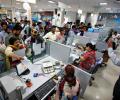
Currently, banks are closed every second and fourth Saturday of a month. Why shouldn't they be shut every Saturday? When most customers carry their banks in their pocket (the app on the mobile phone), there is no need to keep banks open on Saturdays, argues Tamal Bandyopadhyay.
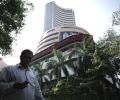
Money flowing into the equity schemes of mutual funds is back at a level last seen before the 2008 financial crisis, when the stock market tanked 60 per cent.

Corrective measures are already being taken by fund managers - overall allocation to the IT firm has been pruned by 120 basis points, from 4.43 per cent in March to 3.24 per cent in July

The case pertains to alleged financial irregularities in supply of high-altitude tents worth Rs 22 crore to intelligence agency Research and Analysis Wing during 2009-13.

Management buyout vehicle Excalibur Steel, Sanjeev Gupta's Liberty House metals group, India's JSW Steel Ltd and Greybull Capital have submitted separate bids

A day after announcing withdrawal from its chip-making JV with Indian conglomerate Vedanta, Foxconn on Tuesday said it is working on plans to apply for incentives under semiconductor and display fab programme, as the contract manufacturer pledged its commitment to India. The Taiwanese electronics manufacturing giant said it has been actively reviewing landscape for optimal partners. The comment assumes significance as Foxconn has pulled out from the $19.5 billion semiconductor JV with Vedanta.

Reliance Industries (RIL) is likely to be the lone bidder for Mangalore-based JBF Petrochemicals, which is up for sale after defaulting on bank loans worth Rs 5,000 crore. The lenders for the second time extended the deadline for submission of bids, which had ended on August 20, as several players, including public sector companies, were redrawing their acquisition plans, said people in the know. "There were several companies which had submitted their expressions of interest (EoIs) for the company but after due diligence decided to exit the race," said a source close to the development. "The new deadline for submitting financial offers is August-end," the source said.
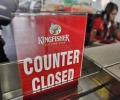
'The approach towards Mallya is not right because his unit could have been turned around earlier with additional funds from his side and the bank's side.'

Merely bringing down the government stake below 51% may not find any taker for the PSBs. The government must bring down its holding to at least 26%, recommends Tamal Bandyopadhyay.
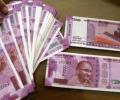
To ease pressure due to the coronavirus lockdown, corporate have asked banks and the government for a six-month liquidity line, so that they can pay off their suppliers and employees.

India's economic image is not affected due to Adani Group's recent decision to pull out Rs 20,000 crore FPO (follow-on public offers) amid allegations of financial wrongdoings, Finance Minister Nirmala Sitharaman said on Saturday.

Coming Wednesday, Finance Minister (FM) Nirmala Sitharaman will present the 2023 Union Budget - the last full Budget ahead of the 2024 Lok Sabha elections. While India exited 2022 as a relatively bright spot in the global economy, the FM will endeavour to present a Budget that insulates India's economy against global headwinds and recession in advanced economies, while sticking to the path of fiscal consolidation. In this, she is being helped by her core team of trusted advisors.

There have been demands from a section of stakeholders that the long-term capital gains tax on equities be reimposed.

Move 10 per cent of your portfolio to the yellow metal.

Real estate developer Supertech on Friday was declared bankrupt by the National Company Law Tribunal (NCLT), a move that could have a bearing on 25,000 home buyers of the firm's ongoing projects in the Delhi and NCR region. Acting on a petition filed by the Union Bank of India for non-payment of around Rs 432 crore worth dues, the bankruptcy court ordered the initiation of insolvency proceedings against real estate firm Supertech Ltd, one of the companies of Supertech group. The NCLT said "there has been a default in payment of the financial debt" and appointed Hitesh Goyal as the Interim Resolution Professional (IRP) superseding the board of Supertech Ltd.

In the June quarter of FY24, 51 per cent of consumers who took small-ticket personal loans already had more than four credit products at the time of accessing yet another new loan, compared with just 17 per cent in the June quarter of FY20, points out Tamal Bandyopadhyay.

10 non-bank and non-finance stocks from the BSE500 Index universe that offer an optimal blend of low valuation, reasonably robust revenue and earnings growth in recent quarters, a strong balance sheet, and most importantly, positive cash flow from their operations.

Finance Minister Nirmala Sitharaman will present her second Budget a little more than a month from now. Like any other FM, Sitharaman will depend on her team of bureaucrats and advisors to frame and present the Budget.

The airline's 100 per cent shareholding in profit-making budget carrier Air India Express as well as 50 per cent shareholding in equal joint venture Air India SATS Airport Services would also be sold.

The government currently holds 87.40 per cent stake in IRCTC. To meet Sebi's public holding norm, it has to lower its stake in the company to 75 per cent.

The guidelines for strategic disinvestment were issued on Monday itself when Finance Minister Arun Jaitley presented the Union Budget for 2016-17.

The central government has agreed in-principle to Air India employees' main demands. It fears an industrial dissension now could impede the process of privatisation. It has agreed to bear the cost of liquidation loss on account of transfer to the Employees' Provident Fund Organisation (EPFO) from company-owned trusts, inclusion of employees in the central government health scheme (CGHS), and encashment of leaves. The template of the Air India process will be followed for other public sector undertakings up for privatisation at a later date.

The Centre's push to sell Air India on priority has led to delays in other strategic divestment proposals, such as privatising United India Insurance, as well as ongoing transactions, such as Shipping Corporation of India (SCI) and Bharat Petroleum Corporation (BPCL), revealed multiple officials involved in the process. The Department of Investment and Public Asset Management (DIPAM) is yet to take new privatisation recommendations of the NITI Aayog to the core group of secretaries on disinvestment (CGD) headed by the Cabinet secretary, said one of the officials. The priority now is to ensure all approvals for Air India are in place since the government intends to hand over the national carrier as early as this month.
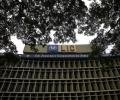
Life Insurance Corporation of India (LIC) has increased the size of its shareholders' fund to Rs 6,600 crore from Rs 100 crore in a bid to accommodate a larger shareholder base ahead of its public listing. The size of the fund has been enhanced by retaining two years' of dividend and issuing fresh capital, said an official. Increasing the size of the shareholders' fund will help boost the number of shares for allotment in the insurer's initial public offering (IPO). The corpus represents the amount of equity in a company that belongs to its shareholders.

The change in ownership is expected to give a fresh lease of life to the company that has often been dragged by financial stress in its close to three-decade journey under the Khaitans, reports Ishita Ayan Dutt.

'Money that came into mutual funds near the previous peaks -- the second half of 2017 and 2018 -- has in most cases experienced unflattering returns.' 'A large proportion of redemptions could be such inflows exiting when the market recovered sharply from July 2020 onwards.'

Airports hold pride of place in the government's National Monetisation Pipeline (NMP) programme to monetise public assets. Private airport operators, including the Adani group, Fairfax, GMR and Zurich Airport, are expected to evince interest in the next round of public private partnership (PPP) development of state-owned Airport Authority of India (AAI) airports. Industry analysts, however, do not expect bids to be as high as the last round, which saw Adani group gain control of six airports.
The meeting is expected to chart a road map for cleaning up their balance sheets and boost credit flows, reports Somesh Jha.

If nothing is done, the country is set to become 83 per cent energy-import-dependent by 2040.

The divestment process, however, will not be an easy affair as there are multiple stakeholders, including the employee unions, whose concerns will have to be addressed.

Jayant Chaudhary has plenty of time to make his own mistakes. But this election is a crucial test of his leadership.

The government is selling its entire 100 per cent stake in Air India but wants effective control to stay with Indian nationals.

Three closed-ended equity schemes have been launched in the past month or so and another is set to open soon for subscription.

You can look at equity-oriented balanced funds.
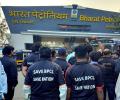
The divestment of Bharat Petroleum Corporation (BPCL) may hit a fuel price hurdle, according to officials dealing with the matter. They pointed out that the inconspicuous administered price regime could hamper the prospects for potential buyers of BPCL. A senior oil ministry official said public-sector oil-marketing companies (OMCs) take a hit when they sell petrol, diesel, and liquefied petroleum gas (LPG), three of the most popular petroleum products in the country.

The current wage revision for PSBs, as well as some private lenders, is due from November 2017 for five years - up to October 2022.
 © 2026 Rediff.com - Advertise with us - Disclaimer - Privacy Policy - Sitemap - Feedback - About us - Terms of use - Grievances